


Blog
How to Exchange XMR for BTC: Check the Address and Transaction Status

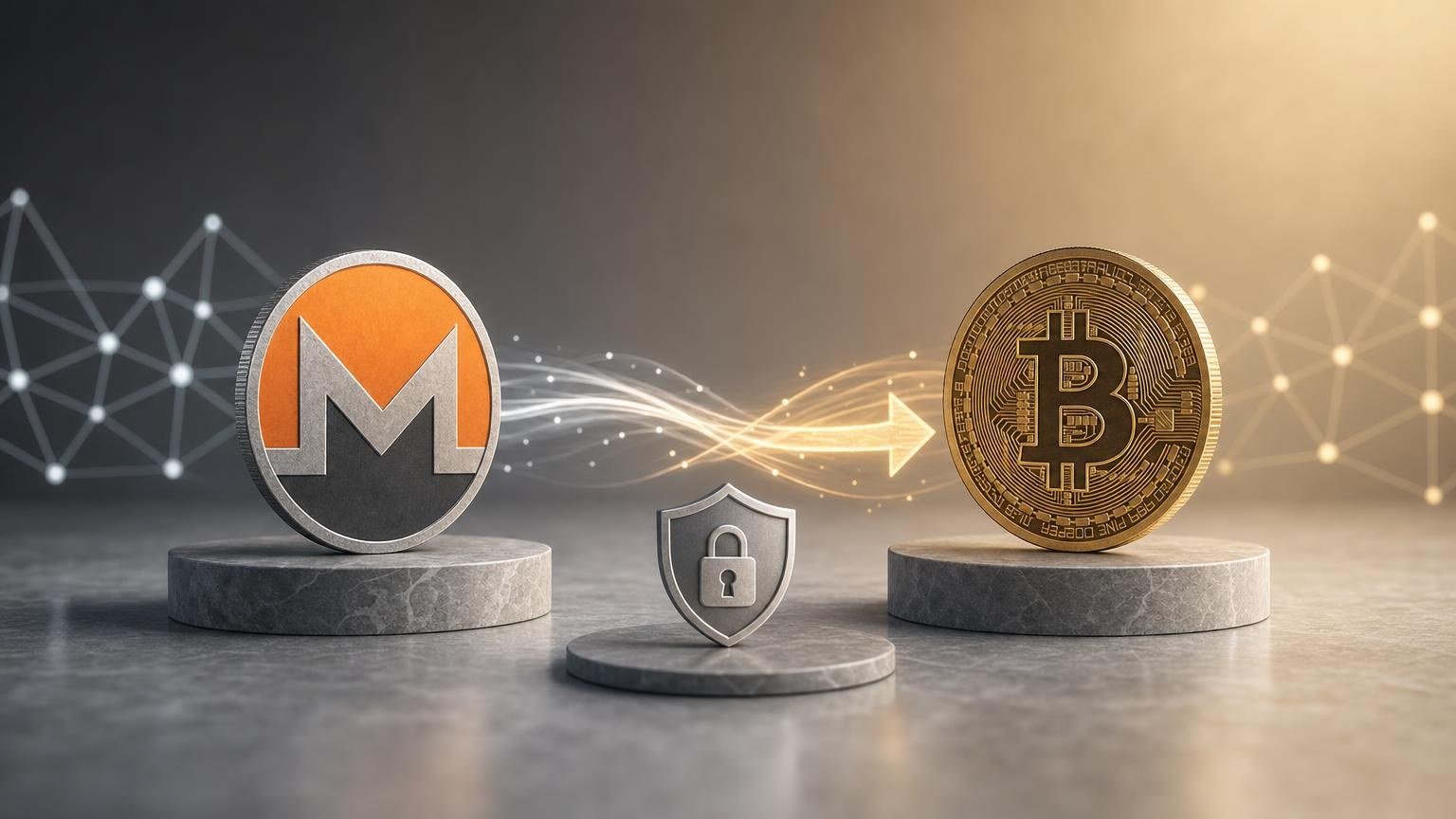
To exchange Monero (XMR) for Bitcoin (BTC), you need two correct destinations: the XMR deposit details generated for the order and a BTC receiving address controlled by you or your intended recipient. The safe route is to verify both before sending, save the order details and transaction ID, and treat the exchange as complete only after the BTC transaction appears at the correct address with the required status.
Operation state map: from exchange request to confirmed BTC
- Task: exchange XMR for BTC.
- Transition condition: the XMR-to-BTC direction is currently available and its displayed terms are acceptable.
- Check: confirm the input asset is XMR, the output asset is BTC, and the shown direction has not been reversed.
- Stop if it does not match: do not substitute a different asset, network, or direction simply because it appears in the interface.
- Source data: prepare the BTC receiving details.
- Transition condition: your wallet provides a valid BTC address for the exact Bitcoin transfer method supported by the order.
- Check: copy the address directly from the wallet, compare its beginning and ending characters after pasting, and verify the selected account.
- Stop if it does not match: do not continue if the address changed in the clipboard, belongs to another asset, or requires a network that the exchange order does not support.
- Verification: review the quote and order conditions.
- Transition condition: the displayed XMR amount, estimated or fixed BTC output where applicable, fees, limits, and any compliance requirements are understood.
- Check: distinguish the amount sent from your wallet from the amount expected at the BTC destination. Account for the XMR network fee shown by your wallet and any exchange costs disclosed in the order.
- Stop if it does not match: pause if the expected result changes materially, the quote expires, or the requested checks differ from what you are prepared to complete.
- Action: create the order and obtain the XMR deposit details.
- Transition condition: all earlier checks are complete.
- Check: save the order identifier, XMR deposit address, exact amount rules, expiration information if displayed, and support instructions.
- Stop if it does not match: never send XMR to an address copied from an advertisement, message, search result, or an older order.
- Waiting: send XMR and monitor the deposit.
- Transition condition: the final wallet confirmation screen still shows the order’s XMR address and intended amount.
- Check: after broadcasting, record the XMR transaction ID and watch the wallet and order page for pending and confirmed states.
- Stop if it does not match: do not send a second payment merely because the order page has not updated; first determine whether the original transaction was broadcast and confirmed.
- Processing: wait for the BTC payout.
- Transition condition: the service recognizes the required XMR deposit and moves the order into processing or an equivalent state.
- Check: look for a BTC payout transaction ID, then verify that it belongs to the expected network and pays the address entered in the order.
- Stop if it does not match: if the service reports an error, requests another deposit, or shows different destination details, preserve the evidence and use the recovery route below.
- Result: BTC received or recovery started.
- Transition condition: the BTC transaction is visible in the receiving wallet or a reputable Bitcoin block explorer and has reached the confirmation requirement shown by the receiving wallet or platform.
- Check: match the BTC transaction ID, destination address, amount, and confirmation status with the order record.
- Stop if it does not match: do not treat an order-page message alone as proof that spendable BTC reached the intended wallet.
Check the asset, network, and BTC receiving address
The route must say XMR as the deposit asset and BTC as the payout asset. Availability can change, so verify the pair before creating an order rather than assuming every listed asset can be exchanged in every direction.
“BTC” can be presented by wallets and services through different transfer methods. Use only the Bitcoin network or transfer method explicitly accepted by the order and supported by the receiving wallet. Do not send to a wrapped-BTC address on another blockchain, and do not select Lightning unless both the exchange and the destination explicitly support that route.
A Bitcoin address may use one of several valid formats, so its first characters alone do not prove that it belongs to the intended recipient. Bitcoin address encoding includes error-detection features that help catch some typing mistakes, but this does not protect against copying a valid address controlled by someone else. Compare the address on two screens where possible, check several characters at both ends, and confirm it again on a hardware wallet display if one is used. [1]
BTC payments normally do not use an exchange Memo or Tag in the way some other assets do. Still, follow the destination wallet’s instructions: if an account specifically displays an additional identifier, determine whether it is required for that exact deposit route before proceeding. Never invent a Memo, reuse one from another order, or place an identifier in an unrelated field.
Review the amount, fees, and irreversible step
Before creating the order, note whether the displayed BTC result is fixed or only an estimate and what may cause it to change. Do not infer a rate, fee, limit, or processing time that the order does not state. The relevant figures are those displayed for the current request before you approve it.
Your XMR wallet may deduct a network fee from the wallet balance. Monero’s official guidance states that the sender pays this fee and that it depends on transaction data size and network conditions rather than simply being a percentage of the amount. Check whether your wallet’s amount field means “send this amount” or “spend this total,” because the distinction can leave the deposit short. [2]
The last wallet confirmation is the main checkpoint before an irreversible action. Compare the XMR deposit address against the current order, review the amount, and make sure you are not looking at an expired or replaced request. Confirmed Monero transactions cannot be reversed by the sender; recovery after a wrong-address payment depends on the recipient’s cooperation and may be impossible. [2]
Once the pair, destination, quote, current requirements, and both wallet screens have been checked, you can create an XMR-to-BTC exchange order and review its deposit details. Save a copy of the order information before sending funds, but do not publish transaction keys, wallet seeds, or private keys.
Track the XMR deposit correctly
After the wallet broadcasts the XMR payment, save its transaction ID. A pending transaction has been submitted but is not yet included in a block; a confirmed transaction has been included, and later blocks add confirmations. The number of confirmations required before an exchange credits a deposit is a service rule, so use the current order status rather than assuming a universal threshold. [2]
Monero’s privacy model means a public block explorer does not reveal the recipient and amount in the same way a Bitcoin explorer generally can. A transaction ID can help establish that a transaction exists, but it does not by itself publicly prove how much XMR was sent to the exchange address. Official Monero tools can verify a payment using the transaction ID, destination address, and transaction key; sharing that transaction key reveals information about the specified payment, so provide it only through a trusted support channel when it is genuinely needed. [3]
The transaction key is not the wallet seed or private spend key. Never send a seed phrase, wallet file password, private spend key, or remote-access credentials to someone claiming that they are required to locate the deposit. Requests for those secrets are a reason to stop.
Verify the BTC payout and confirmations
When processing finishes, the order may display a BTC transaction ID. Check that identifier in your BTC wallet or a reputable Bitcoin block explorer. The observable success signs are the expected receiving address in the transaction outputs, the appropriate amount credited to that address, and a confirmation count that increases as new blocks are added.
A wallet may show an incoming transaction before it is confirmed. This is evidence that a payout was broadcast, not necessarily that the funds meet the wallet’s or receiving platform’s acceptance policy. Wait for the required number of confirmations shown by that destination. If the BTC transaction is confirmed on-chain but the wallet balance is absent, verify wallet synchronization, the selected account, and whether the address belongs to that wallet.
Be careful with status pages reached through messages or advertisements. Open the order through your saved details, check the domain independently, and avoid entering wallet secrets on a page reached through an unsolicited link. A phishing page can display a plausible order while replacing the real deposit address.
Delayed or incorrect transaction: diagnostic branches
The XMR wallet shows no transaction ID
The transaction may not have been broadcast. Check wallet synchronization, available unlocked balance, and the wallet’s failed or pending status. Do not recreate the order or send again until the wallet clearly shows what happened to the first attempt.
The XMR transaction is pending
Keep the transaction ID and wait for a confirmed state. Compare the wallet status with the order page. If the order expires while a genuine payment is pending, contact support with the order identifier and transaction ID; expiration does not by itself establish whether the funds can be credited or returned.
XMR is confirmed, but the order does not recognize it
Recheck the deposit address, amount conditions, and whether the payment was sent within the order’s stated rules. Preserve the transaction ID and wallet record. Because Monero hides payment details publicly, support may request an appropriate payment proof. Use only the official channel associated with the order, and do not assume that providing proof guarantees recovery.
The order shows a BTC payout, but the wallet does not
Find the BTC transaction ID and compare its destination output with the address submitted in the order. If they match, check confirmations and wallet synchronization. If the order contains the wrong address but the transaction is already confirmed, Bitcoin’s design does not provide a general sender-side reversal mechanism; any remedy depends on who controls the destination address.
The status is failed, held, or requires review
Do not send another amount unless the service gives verifiable instructions tied to the existing order. Requirements can depend on the exchange direction and compliance results. Ask what information is needed, why the order is paused, and what available resolution paths apply. Rules may also differ by country, so the interface and current terms for your location remain relevant.
What counts as a completed route
The route is complete when the BTC transaction pays the address you submitted, appears in the correct receiving wallet or on-chain record, and reaches the confirmation status required by that wallet or platform. Keep the order identifier and both transaction IDs until these checks agree.
Some uncertainty can remain while blocks are pending, a wallet is synchronizing, or an order is under review. These states call for verification rather than a duplicate payment. If the address, asset, network, amount rule, or order identity no longer matches the original XMR-to-BTC task, stop before taking another irreversible step.